
The Hardest Part of Parenting (And It’s Not What You Think)
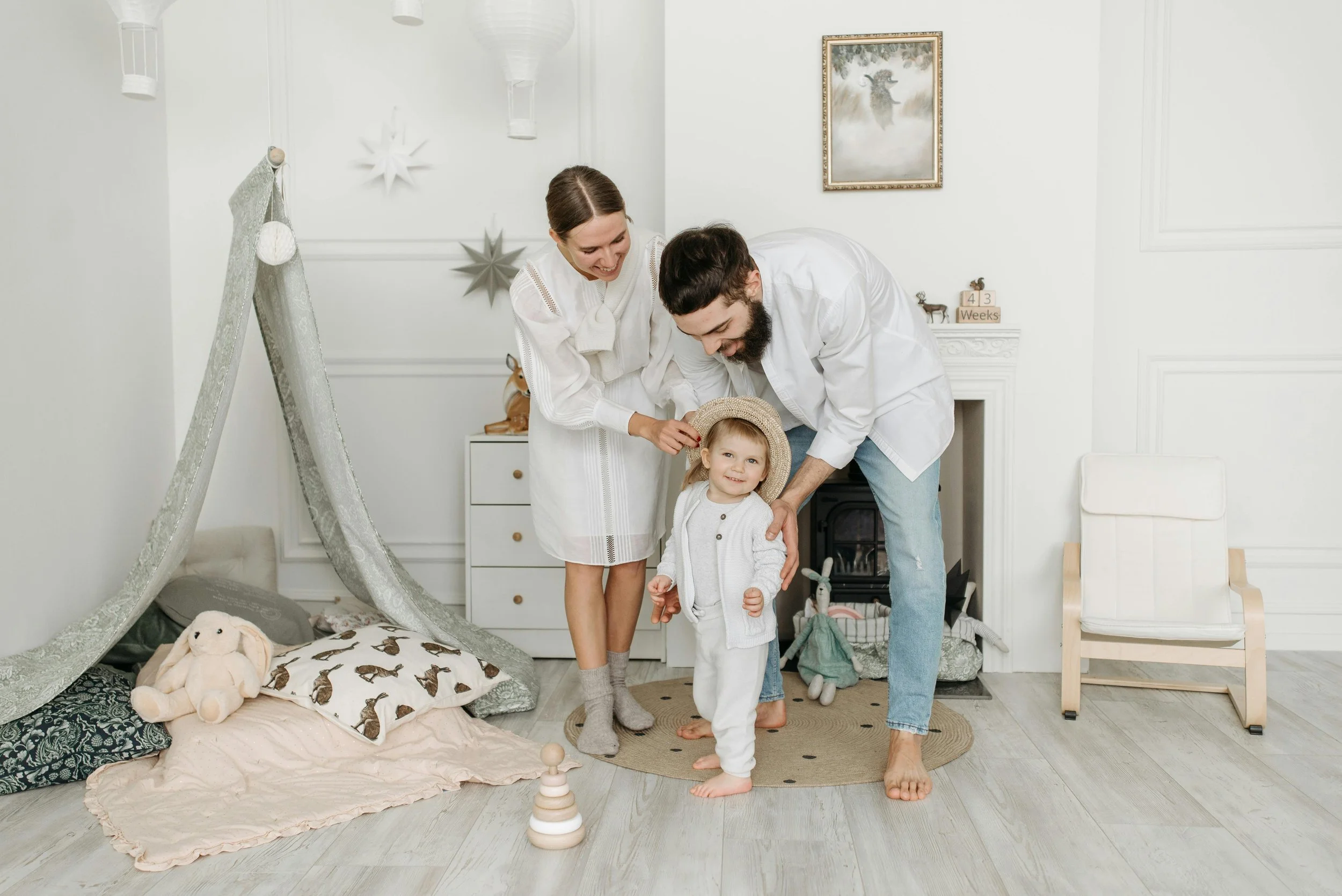
In a world of constant distraction, learning how to be present as a parent is one of the most important parenting skills you can build—especially if you want strong connection with your child, healthy attachment, and a peaceful home.
Before I became a parent, if you’d asked me what the hardest part of raising children would be, I never would have said being present. Not even close!
Of course, I knew that parenting wouldn’t be easy. I expected sleepless nights, strong-willed moments and the endless logistics of family life. But I honestly didn’t think that staying emotionally available, mentally engaged and truly attentive would be one of my greatest daily battles.
And yet, here I am, two decades later, looking back and realising something sobering: my presence was constantly competing. It was competing with stress, screens, to-do lists, ministry, the mental load and the quiet pressure to 'keep up'. Even in a loving home, it's possible to drift into survival mode and miss the moments when our children need us the most.
If you’re a mum or dad who often feels overwhelmed, distracted or guilty because you’re physically present but not fully there, this is for you. Intentional parenting in a distracted world doesn’t just happen. It has to be chosen.
If you're looking for something practical rather than vague, I'll provide a simple rhythm for you to start practising this week later in this post.
Presence over Perfection
There are so many 'important' things pulling at us, and not just the obvious distractions like phones and notifications. Sometimes it's the ordinary things that steal our attention the fastest.
Take laundry, for example. One glance at the overflowing basket and suddenly we’re in emergency mode: 'I can't let my kids go out naked!'
True, but let's be realistic — that's not actually going to happen, so relax and breath. I gained something priceless by learning to build a simple routine and stop treating laundry like a daily crisis.By choosing one dedicated laundry day, I stopped washing and folding every single day. I had a clear time slot, felt far less overwhelmed—and that margin turned into presence.
How about cleaning?
Yes, it matters. A home should be cared for. However, when the goal becomes 'I can’t relax until everything is spotless', cleaning your floors becomes a drain on your day. I had to recognise that in myself. It was a real struggle.
The truth is, I don’t need to deep clean every day. When I do, it steals my most valuable parenting currency: undistracted time.
Even when I was itching to tidy up, I practiced staying present—and I structured my week again by setting one cleaning day. Yes, my favorite device, the vacuum, came out more than once. But I grew. And one decision changed everything: Sundays became vacuum-free.
That one rule felt like freedom. It set the tone for our home, and it made me more relaxed for the rest of the week, too. When I stopped chasing 'perfect', I became more available for what actually mattered.
A spotless home has never healed a child’s heart. But a calm, present parent can.
Of course, that extra time can vanish fast—dirty windows you can barely see through, meals to cook, decorations to put up, things to organize… and suddenly the list never ends.
Maybe you’re thinking now, 'Honestly, housework isn't my struggle,' or 'I'm not a clean freak,' or even 'I've got help, so that's covered.'
Fair enough.
But here’s the thing: presence isn't only competing with housework. There's more.
Always Saying Yes? How Overcommitment Drains Your Family
Overcommitment is one of the most common causes of burnout in modern parenting, and it often leads to emotional distance—even when you love your kids deeply.
The reality is that having time doesn’t automatically mean we’re using it well. You can be physically in the room and still be mentally a thousand miles away.
So what are the other things that steal our presence from our kids?
Sometimes it’s volunteer work. Sometimes it’s the habit of always being available, always saying yes and always meeting everyone else’s needs. And yes, helping others can feel good. It gives you that sense of having done something meaningful.
However, if we’re not careful, even good things can quietly drain the attention and energy that should be given to our own home first. This isn't because serving is wrong, but because our priorities can become misaligned.
I used to say this all the time: 'I don't want to give my children the leftovers — I want to give them my best.' And I meant it.
Yet too often, I gave so much of myself to so many people that I came home worn out, impatient and with nothing left to give my family. The people outside my home got my fresh energy, and my family got whatever crumbs were left.
That’s when I realised I needed to make some courageous changes for the health of my family, my marriage and my kids.
If your “yes” to everyone else produces an exhausted, irritable parent at home, it’s not a holy yes anymore—it’s a misaligned one.
Scrolling Away Childhood
Then there's the big one for modern parents: social media. Of course, you don't want to miss out on what your real friends — and your self-proclaimed friends — around the world are doing. It feels harmless. It's just for a minute. But it rarely stays that way.
The same goes for online shopping. Years ago, none of us would have imagined it becoming so normal, yet for many people now, it's basically a leisure activity: scroll, compare, save, check out, repeat. Scroll, compare, save, check out... repeat.
From my own experience, not only does everything connected to the internet give us the “freedom” it promises, it also quietly steals hours. Not always in obvious ways. Small moments here, small moments there... until one day you realise that the time was real and that you missed out on real memories.
Take a brave look at your screen time. I know it can feel daunting—and honestly, we’d rather not know. But if you can see it now, you can still change it. So open your eyes, check the numbers, and decide if this is the way you want to use your time.
Practical mini-action:
One simple step: put your phone on grayscale and keep it out of the kitchen and bedroom for one week. You’ll be shocked how much calmer you feel.
The strange thing about life right now is that being present has become a luxury. Genuine, undistracted time spent together is rare because most of us are spread too thin, running on empty while trying to keep up.
Somehow, we’ve started wearing being busy like a badge of honour. If we’re not busy, we feel like something must be wrong. Being busy becomes proof that we’re needed, that we matter, that we’re succeeding. But are we?
I want to challenge the cultural norm that has quietly seeped into our families: being busy is not better. A life in which you can give your family the gift of your attention, peace and presence is better. That’s the kind of success your children will remember.
We tell ourselves that modern life is helping, don't we? 'There's no need to drive over — just FaceTime! Skype. Send a quick message.' And yes, it saves travel time.
But what do we actually do with the minutes we 'save'? Do we use them to be fully present with the people we love, or do they get swallowed up by the next task, the next scroll, the next demand? Honestly, I doubt it.
Because the conveniences of modern life don’t only 'save time'. They also drain our patience and quietly steal our presence — not just the chance to be present, but sometimes even the ability. When your mind is constantly switching, scrolling and juggling, it becomes harder to slow down, listen well, notice what’s going on in your child's heart and truly connect.
You've probably noticed this too: none of these things are inherently bad. That’s exactly why they’re so hard to spot. The real danger isn’t always in the obviously bad things; it’s in the good things that slowly take too much.
So, what are your thieves?
Recently, I’ve started noticing them again. I want to be honest about them, not to live with guilt, but to continue growing as a person. I don’t just want to be in the same room as my children. I want to be truly present — the kind of parent who sees, hears and connects with their children.
Here’s the sobering truth: I still have time to change. But one day, I won't.
Parenting isn’t eternal. Childhood is a season and it passes quickly. There will be 'last times' that we won't even notice — the last time they reach for our hand, the last bedtime story, the last time they ask us to watch them do something simple yet important in their little world.
And the early years? They matter more than most of us realise. The first five years are intensely formative in terms of attachment, trust, emotional security, how they experience love and how safe the world feels. They’re learning: 'Do I matter? Am I seen? Am I safe? Can I come to you?” Not from our lectures, but from our presence.
James 1:19 says it plainly: “Be quick to listen, slow to speak, slow to become angry.” Presence often looks like listening first—without rushing to fix.
So, let me ask you plainly: what are you prioritising this season?
Are you choosing constant motion or connection?
Are you choosing a perfect-looking house... or a child who feels secure?
Are you prioritising the needs of others over your family's foundation?
This isn’t about being a perfect parent. It's about being a present one.
Because one day, the house will be quiet. The schedules will change. The little voices will grow up and leave home. What will remain won't be how clean your windows were or how many emails you answered; it'll be the memories your children carry in their hearts.
So, if you feel that nudge right now, don't ignore it. Start small. Choose one change. Protect one moment. Have one conversation without your phone. Slow down one evening. Set one boundary.
You don't need to do everything. You just need to start somewhere.
A Simple Proactive Rhythm: The “10–10–10 Presence Rule” (Start This Week)
For the next 7 days, pick ONE daily moment and guard it like a non-negotiable appointment:
• 10 minutes of connection when they wake up / after school (no phone, no multitasking).
• 10 minutes of shared life (walk, snack, game, cooking, folding laundry together—anything that includes eye contact and conversation).
• 10 minutes of closure before bed (a short talk, prayer, blessing, or reading—even with teens).
This isn’t about adding pressure—it’s about removing noise. If you miss a day, don’t spiral. Just restart the next day. Consistency beats intensity.
And here’s a line to practice: “I’ll answer that message later—my child is more important than my notifications.”
Your children won't remember a perfect home.
They’ll remember a parent who is present.
'To be in your children’s memories tomorrow, you have to be in their lives today.' —Barbara Johnson
Holy Spirit, show me my biggest thief of presence—and give me the courage to shut the door on it this week. Teach me to lead my home with peace. Amen.
👉 Want weekly parenting encouragement?
Parenting isn’t meant to be done alone. Let us walk with you—offering encouragement, fresh ideas, and a reminder that hope is always possible.
✉️ Yes, send me encouragement