
The Power of Family Dinner
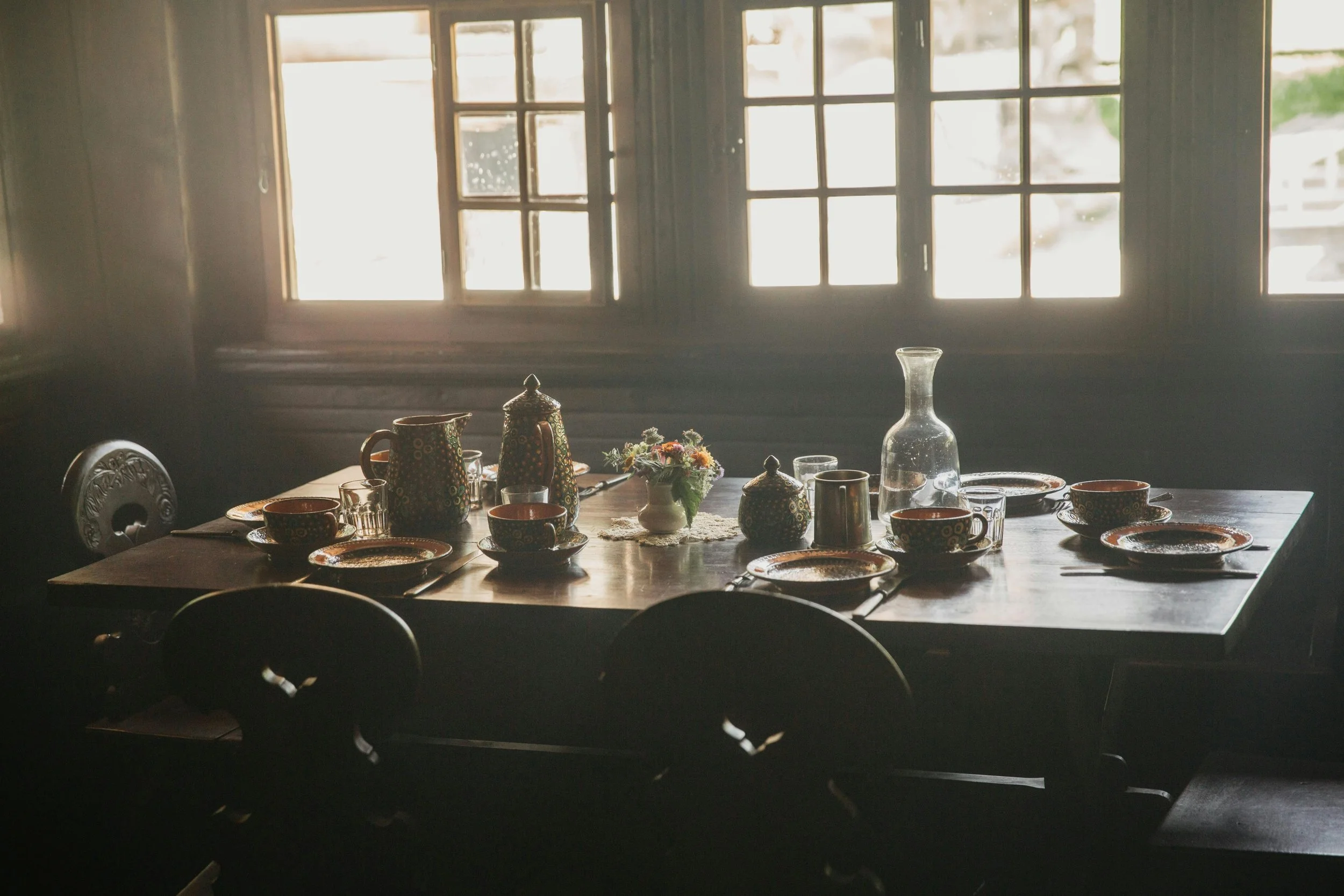
I still remember the season when we lived on a tiny island—one of the smallest inhabited islands in the Grenadines. Life there was simple, almost tucked away from the rest of the world. One day, we were invited to visit some friends who ran a small but beautiful bungalow resort. Since they didn't have any guests for a week, they invited us to enjoy the pool and relax in the peaceful surroundings. Being in such a luxurious environment, where every comfort was provided, felt like a brief pause in our everyday routine — a short holiday tucked into ordinary life.
We were spoiled with delicious meals and enjoyed our conversations around the table.
At the end, the wife told me how amazed she was that our children stayed at the table for such a long time (they don’t have children themselves).
I was touched. These are the seemingly little moments when all your parenting makes sense—not because someone notices it (that’s never the reason we do it), but because you suddenly realize that all those years of sowing, teaching, and persevering through frustration have borne fruit. I can still remember when our meals looked more like a battlefield than a peaceful family gathering. There were tears, constant interruptions, and endless attempts to keep little bottoms on chairs. Sometimes it felt exhausting, even pointless. I found myself wondering if anything we taught was sinking in. We all face seasons like this, with questions and doubts overwhelming us. Parenting isn't about instant gratification. Seeds take time. Sometimes years — sometimes many years. But in that simple moment, sitting at the table with our friends, I caught a glimpse of the harvest.
And if you’re in the “battlefield” season right now, I want you to hear this clearly: you are not failing—you are training.
Why Kids Staying at the Table Isn’t “Luck” (It’s Training + Vision)
The truth is, no one can really see all the effort you put into such a seemingly small act of children staying seated at the table. Most people only notice the end result. And those who might have witnessed some of the “messier” moments along the way have long since forgotten them. I remember my in-laws not appreciating us keeping our children at the table, and then years later praising how well-behaved they were. It didn’t feel like a cause-and-effect victory; more like change simply happened. I often meet parents still waiting for that pivotal moment when everything changes, not through effort, practice or patience, but as if children simply grow out of it. Be honest: in which areas of parenting are you looking for a quick fix instead of putting in the work, training and being present each day? Often, it is not a conscious choice. We are not even aware of what we are waiting for, but we somehow hope for instant change: sitting quietly at the table, obedience, gentleness, and so on.
This is exactly where modern parenting gets pulled off course: we’re promised “fast results,” but real character is slow fruit.
Maybe you’re reading this and you wish your kids were able to do the same, stay at the table.
If you’ve ever searched “my toddler won’t sit at the table,” you’re in the right place.
Over the years I got many comments from parents highlighting how incredibly “easy” my kids must be—that they could sit at the table, sleep well, play on their own, eat everything, and the list goes on. Secretly, I was a little offended because it implied that it was just luck. That I got lucky with 'easy kids'. It was as if it wasn’t the result of working day in and day out to teach them, to uphold the values we believed in and to pursue a vision that went beyond the short-term goal of getting through a meal.
I soon realized it wasn’t mainly about me. Calling it “just luck” can feel comforting, because luck asks nothing of us. But if it isn’t random, then we have to face the truth: our everyday choices—how we speak when we’re tired, what habits we model, the boundaries we keep, the apologies we make—quietly shape the outcome. Most of that work is hidden, and the results are slow. Still, those small, steady decisions either move growth forward or hold it back. So no, it’s not magic. It’s the fruit of what we practice, day after day.
And this is good news—because if it’s shaped, it can be reshaped.
Let's be clear. Nobody has 'easy' children. Even children who appear easy to others still present challenges that are invisible to outsiders. Their parents know that all too well. Rather than leaving it up to chance to label our kids as "easy" or not, we should aim to raise them well.
If I could take you on the journey of my parenting, you would see that it was intentional—and that I could have given up more times than I care to admit. Sometimes I honestly thought it was one of the most impossible tasks in the world to keep a toddler at the table. Can you relate? I get it. What carried me through wasn’t the hope of a peaceful meal in the moment, but the vision of the meals we would share in the future. The table is the social gathering point of every family—a place where we share our dreams, talk about challenges and fears, encourage one another, and pray together. I wasn’t willing to give that up for a couple of years of screaming, crying, and frustration, because what I saw in the future was far more appealing than what I was experiencing in the moment. And let me assure you—the “now” was exhausting.
And yes—this is discipleship. The table is one of the most underrated training grounds in a home.
Dinner Table Training: What We Practically Did (Toddlers to Kids)
Ok, ok, I will share a little about what we practically did:
Keep them at the table from the start.
When your baby begins solids around 6 months, you might feed them before the family meal. Still, keep them in their highchair near the table. Give them a small, non-distracting toy so they learn that mealtimes are about being together. Think of this as “table training” long before you expect “table manners.”Around 12 months, bring them fully into family meals.
Once they’re eating the same meals as you, make the goal to keep them at the table. No devices. No screens. Instead, let them have a simple book, a crayon, or a quiet toy they enjoy. This is key: you are training presence, not just behavior.What about whining and crying?
This is where it gets real. When they cried or fussed, we didn’t immediately let them down. Not for hours, of course—but every day we tried to keep them just a little longer. Maybe 5 minutes more than yesterday. Small wins matter. Slow progress is still progressLetting them down right away teaches them that persistence wins: “If I cry long enough, I get what I want.”
Keeping them gently but firmly at the table, even through the whining, teaches endurance and shapes expectations. Gentle doesn’t mean weak—gentle means calm strength.
Don’t expect instant peace.
No one enjoys eating next to a screaming child—it’s hard. But consistency matters more than comfort in the moment. Over time, those little daily choices add up. This is how toddlers learn: repetition, not lectures.
Keep the Goal in Sight: Why the Family Dinner Table Is Worth It
As a couple, talk openly about your goal. If you want to enjoy the dinner table as a family, understand that it will take years of sowing. But it is absolutely worth it—even if you can’t quite believe that in the middle of the process. We’ve all been there, and we understand. Put it into words: “In our home, the table is a place of connection.”
As a single parent, lean on others to be your encouragers. On those tough days when giving up feels so much easier, get a family you trust on a call. Share your frustration, and let them strengthen you to keep going. We all need reminders that the struggle is not wasted. Single parent—this is not “less than.” You can build a strong table culture too, with support.
We had friends with older kids who showed us that it was possible. They gave us hope when our table felt like chaos, and they reminded us of the harvest we would one day enjoy.
Now, years later, we’re tasting that fruit. We kept our goal in sight. Like athletes in training, we treated every meal as another “training session.” We worked hard not to let discouragement win, fixing our eyes instead on the medal that awaited us. That mindset shift alone changes everything: “This isn’t interruption—this is training.”
The Benefits of Family Dinner (Connection, Behavior, and Long-Term Outcomes)
Parenting requires perseverance and endurance—not just for the short term, but for the long haul. Naturally, there were many times when we felt discouraged, uncertain if we could really make it. But that goal—the vision of what family meals could be—kept us pressing on. And it’s not just our story. Research highlights the same truth again and again: the family table matters.
Family meals provide the opportunity to:
Spend time together, reconnect after a long day, communicate, listen, share values and ideas, and solve problems.
Support healthy language development.
Encourage healthier eating habits.
Studies even show that grades in school can improve with regular family meals. Children who consistently sit down with their families are less likely to fall into risky behaviors like drug use and violence, and they tend to experience fewer mental health struggles.
Whether or not you believe it all is beside the point. The fact remains that family meals have a positive impact on everyone. I have yet to read a single study indicating any negative consequences. And even without research, we know this: relationships are built in repeated moments, not big speeches.
Yes, there will be challenges—sometimes even intense resistance. But the key is knowing why you want to persevere. When you keep that vision before you, the daily sowing, the tears, the noise, and the persistence all lead to something beautiful: a table where your family gathers, connects, and grows together. This will far outlive the years when your children live under your roof. It will grow with them into the years when they choose to come home, not out of obligation, but because they know that the dining table is a place where they belong, feel safe and are loved. It will be a place where they are seen, heard and welcomed. That is the real win: not “quiet kids,” but connected hearts.
The 7-Day Table Training Challenge (Start Tonight)
Pick ONE meal per day (even if it’s short).
– Sit together for 10 minutes (timer helps).
– No screens at the table.
– One simple question each night: “What was the best part of your day?”
– If whining happens: stay calm, hold the line, add one minute tomorrow.
After 7 days, review: Is the atmosphere shifting—even slightly? If yes, keep going.
👉 Want weekly parenting encouragement?
Parenting isn’t meant to be done alone. Let us walk with you—offering encouragement, fresh ideas, and a reminder that hope is always possible.
✉️ Yes, send me encouragement